International Power Electronics Conference
- Integration of Power conversion, Electric machine, and Control -
International Power Electronics Conference
- Integration of Power conversion, Electric machine, and Control -
IPEC-Tokyo 1983 - A Milestone Event of Power Electronics Innovation
Twenty-five years after the market introduction by General Electric of the first silicon controlled rectifier (SCR), nowadays called thyristor, Japanese researchers presented at IPEC 1983 fully functional Gate Turn-off Thyristors (GTOs). These power devices were to be deployed, among others, in traction drives for high-speed rail Shinkansen trains. GTO’s enabled for the first time the design of high-power voltage-source inverters, which simplified significantly the design of the traction inverters. Indeed, prior to the invention of the GTO, traction drives used either expensive synchronous machines fed by current source load-commutated inverters, while inverters for low-cost induction machines required rather complex and delicate thyristor commutation circuitry, such as the McMurray or Bedford inverters. As such, IPEC 1983 marked a milestone event in which the potential of voltage-source inverters was demonstrated for the first time. It spurred in the following decades the further development of not only silicon turn-off power devices, such as IGBTs and IGCTs, but also many new control algorithms and modulation techniques for voltage-source converters used in various applications, such as active power filters, HVDC, automotive, etc. Now, 43 years later, at this 10th IPEC 2026 we can reflect on the many state-of-the-art contributions that were made and presented at IPEC, and how it evolved in ECCE-IPEC Asia, which is jointly organized by IEEJ and IEEE PELS.
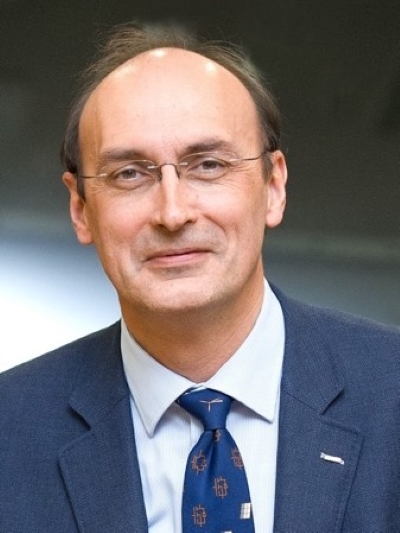
Rik W. De Doncker, (IEEE M’87SM’99F’01, RWTH Fellow) received his Ph.D. degree in electro-mechanical engineering from the KULeuven, Belgium. In 1987, he was appointed Visiting Associate Professor at the University of Wisconsin, Madison, where he developed the DAB converter. In 1988, he joined the GE Corporate Research and Development Center, Schenectady, NY. In November 1994, he joined Silicon Power Corporation (formerly GE-SPCO) as Vice President Technology, developing world’s first medium-voltage static transfer switch. Since Oct. 1996, he is professor at RWTH Aachen University, Germany, where he leads the Institute for Power Electronics and Electrical Drives (ISEA). Oct. 2006 he was appointed director of the E.ON Energy Research Center at RWTH Aachen University, where he leads the Institute of Power Generation and Storage Systems. Since 2014, he is director of the German Federal Government BMBF Flexible Electrical Networks (FEN) Research CAMPUS. He has a doctor honoris causa degree of TU Riga, Latvia. He has published over 800 technical papers and is holder of more than 60 patents. He supervised more than 110 PhD theses. He has co-founded several start-up companies, among these, AixControl GmbH, PicoLas GmbH, StreetScooter Research GmbH, ENGIRO GmbH, AixaTech GmbH, TorqueWerk GmbH.
2005–2006 Dr. De Doncker served as IEEE PELS President. He is recipient of the 2002 IAS Outstanding Achievements Award, the 2013 Newell Power Electronics IEEE Technical Field Award, and the 2014 IEEE PELS Harry A. Owen Outstanding Service Award. In 2015 he was awarded Fellow status at RWTH University. In 2016 he became member of the German Academy of Science and Technology (ACATECH). 2020 he received the IEEE Medal in Power Engineering. 2026 he became member of the US National Academy of Engineering (NAE).
Publication lists can be found in:
https://scholar.google.com/citations?user=sJAhDzwAAAAJ&hl=de&oi=sra
www.eonerc.rwth-aachen.de
www.isea.rwth-aachen.de
www.fen.rwth-aachen.de

Standing on the Shoulders of Giants - Building the Future
The history of the International Power Electronics Conference (IPEC) is closely intertwined with the technological and societal developments that have shaped the modern world. Following Japan’s post-war economic miracle, growing concerns about the limits of global growth, resource scarcity, and the energy crises of the 1970s highlighted the urgent need for more efficient energy conversion and utilization. In response, visionary researchers, industrial leaders, and representatives from Japan, North America, and Europe joined forces to establish a premier international forum dedicated to power electronics, a field uniquely positioned to enable efficient motor drives, renewable energy integration, and advanced electrical energy applications.
From its inception, IPEC has been at the forefront of technological progress. IPEC 1983 showcased the latest power transistor and GTO technologies, signaling the transition from conventional thyristor-based systems toward converter topologies based on fully controllable power semiconductors and microprocessor-based control. IPEC 1990 reinforced this transformation, while IPEC 2000 demonstrated how power electronics had become an enabling technology across virtually all sectors of modern society. Continuous advances in power semiconductor technology culminated in the emergence of wide-bandgap devices, and IPEC 2014 marked the industrial breakthrough of SiC technology, paving the way for unprecedented levels of efficiency, power density, and performance.
Over more than four decades, IPEC has consistently presented leading-edge developments and established itself as one of the world’s most influential conferences in power electronics. Its enduring excellence can be related to symbols deeply rooted in Japanese culture: like a Zen garden, transforming complexity into structured harmony; like a bride in a Japanese garden, bridging academia, industry, and cultures; and like the Sakura blossom, inspiring new scientific concepts and ideas. At the same time, IPEC has generated waves of innovation whose global impact resembles the Great Wave of Kanagawa, continuously reshaping technology and society.
Looking ahead to IPEC 2050, power electronics will remain indispensable in addressing the most pressing energy challenges of our time. The discipline must expand beyond individual converters toward holistic energy electronics systems, support the transition to a circular economy, and accelerate the electrification of hard-to-abate sectors that have so far not received sufficient attention. At the same time, ever-shorter innovation cycles and the pervasive integration of artificial intelligence may fundamentally transform research and development processes. Agentic AI systems and cognitive digital twins of engineers and researchers could become powerful collaborators, accelerating discovery, design optimization, and technology transfer on an unprecedented scale.
Yet regardless of how technologies evolve, the fundamental mission of IPEC will remain unchanged: to bring together the world’s leading researchers, engineers, and innovators to exchange ideas, challenge assumptions, and build lasting international collaborations. The success of IPEC over the past decades gives every reason to believe that, in 2050 and beyond, it will continue to serve as a cornerstone of scientific excellence and a gathering place for both outstanding research and enduring friendships.
Johann W. Kolar is a Life Fellow of the IEEE, an International Member of the US National Academy of Engineering, and a Fellow of the National Academy of Inventors. He joined the Swiss Federal Institute of Technology (ETH) Zurich in 2001 as the Head of the Power Electronic Systems Laboratory, following 15 years as an international consultant and independent researcher. He has proposed numerous novel converter concepts, including the Vienna Rectifier. He has personally supervised 90+ PhD students to completion, extensively published at main international conferences and in IEEE Transactions (1000+ papers), and is named inventor in 200+ granted patents. He has received several awards, incl. 60+ Transactions and Conference Prize Paper Awards, the 2016 IEEE William E. Newell Power Electronics Award, and the 2025 IEEE Medal in Power Engineering. As a Prof. emeritus (since 08/2024), he is actively continuing to pursue research in ultra-compact/efficient WBG converter systems, AI applications in power electronics, Solid-State Transformers, and the life cycle analyses of power electronics converter systems.

From Microprocessors to New Energy Development
In many ways, the first International Power Electronics Conference (IPEC), held in Tokyo in 1983 was a breakthrough in establishing power electronics as a global industrial and academic research discipline. Research communities existed in North America, Europe, and Japan, but interaction among them was relatively limited. IPEC became one of the first truly international forums where these communities met regularly to exchange ideas on converters, motor drives, semiconductor devices, and digital control methods. Many collaborations that later shaped the field began through contacts established at IPEC meetings. A major milestone occurred in 2010, when IPEC became part of the ECCE Asia framework alongside conferences in China and Korea, with strong involvement from the IEEE Power Electronics Society and the IEEE Industry Applications Society. This integration further strengthened Asia’s role as a global center of power electronics innovation.
Over its 43 year history, IPEC has been moving its focus from contributions in different power electronics components more towards Integration of Power conversions, Electric machines, and Control (IPEC), and it is getting ready to lead in the development of new electrical energy systems that will assure sustainable energy abundance for humanity. The evolution of IPEC has paralleled the professional growth of numerous power electronics researchers through the last half century, including the author’s. After a brief look at the confluent growth in the past, the presentation will envisage an emerging focus towards an International Power Electronics Systems Conference (I-PESC).
Dushan Boroyevich received his Dipl. Ing. degree from the University of Belgrade in 1976 and his M.S. degree from the University of Novi Sad in 1982, in what then used to be Yugoslavia. He received his Ph.D. degree in 1986 from Virginia Tech, Blacksburg, USA. Between 1986 and 1990, he was an assistant professor and director of the Power and Industrial Electronics Research Program at the University of Novi Sad. He then joined the Bradley Department of Electrical and Computer Engineering at Virginia Tech as associate professor, and later a co-founder of the Center for Power Electronics Systems (CPES). He retired from Virginia Tech in 2024 as University Distinguished Professor and as Associate Vice-President for Research and Innovation in Energy Systems. Dushan was a mentor for around 60 Ph.D. dissertations and 50 M.S. theses, with whom he co-authored over 900 publications. He continues to be active in consulting and promoting new electronic energy networks for energy transition. He was the president of IEEE Power Electronics Society for 2011–12.
Dushan is a member of the US National Academy of Engineering and is a recipient of 6 honorary professorships in China and Taiwan, as well as numerous other awards, including the IEEE William E. Newell Power Electronics Technical Field Award, the European Power Electronics Association Outstanding Achievement Award, and Ph.D.H.C. from the University of West Bohemia, Czechia. He is IEEE Life Fellow and Fellow of CSEE.
Japan: Gateway for an Electrifying Career
As the world accelerates toward a low-carbon future, electrification is reshaping industries, redefining skills, and creating unprecedented career opportunities. This talk explores Japan’s pivotal role as a gateway for aspiring professionals seeking to build a career and engage with the electrification revolution—from advanced mobility and smart grids to energy storage and next-generation technologies. While IEEE conference series, IEEJ publications, and Japanese Awards have inspired the students and professionals, technology development in Japan—from semiconductors to systems through practical demonstration—has motivated the industry engineers and academic researchers. This talk will cover such aspects including electrification in Singapore.
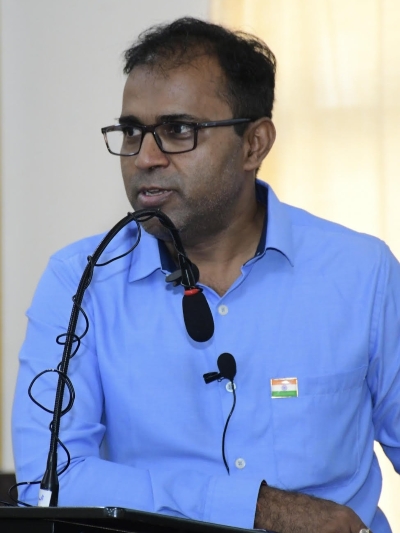
Akshay Kumar Rathore is a Professor and the Director of the Power and Energy Systems Research Area in the Department of Electrical and Computer Engineering at the National University of Singapore. His research focuses on power electronics and control of electric motor drives. He is an IEEE Fellow and a recipient of several prestigious awards, such as the IEEE IAS Andrew W Smith Outstanding Young Member Achievement Award, the Isao Takahashi Power Electronics Award, the IEEE David Irwin Early Career Award, the IEEE Bimal Bose Award for Industrial Electronics Applications in Energy Systems, the Nagamori Award, and the distinguished alumnus award (young achiever) from IIT (BHU) Varanasi, India. During his tenure at Concordia University in Canada, he was listed in the Provost Circle of Distinction in 2021.
Prof. Rathore has contributed significantly to designing novel power electronic converter topologies and modulation strategies, publishing over 300 research articles including about 110 in IEEE Transactions. He edited a book on advanced concepts and technologies for electric transportation, published by CRC Press in 2022. He has delivered over 300 invited expert talks, distinguished lectures, webinars, keynotes, and tutorials at various events globally. He is currently a Distinguished Lecturer of the IEEE Power Electronics Society, Chair of the IEEE IAS Andrew W Smith Outstanding Young Member Achievement Award Committee and serves on the committees for the IEEE Medal in Power Engineering, the IEEE Nikola Tesla Award, and the IEEE Fellow Committee.
IPEC and Power Electronics — Growing Together in Japan
The International Power Electronics Conference (IPEC), first held in Tokyo in 1983, is an international conference that has grown alongside the advancement of power electronics technology in Japan.
During its early years (1983–2000), IPEC was held in Tokyo. From 2014 onward, the conference expanded to cities across Japan while establishing itself as ECCE Asia, building partnerships with IEEE, and forming a three-country rotation system among Japan, China, and Korea. In 2018, attendance exceeded 1,000 for the first time, significantly raising IPEC’s international presence.
IPEC covers the major fields of power electronics, including energy conversion, electric mobility, next-generation power devices such as SiC and GaN, motor drives and control, and carbon neutrality. At the 10th edition, IPEC-Nagasaki 2026, over 1,200 paper submissions have been received. Going forward, IPEC will continue to contribute to a sustainable society through deeper collaboration with IEEE, China, and Korea, the development of young researchers, and the expansion of its technical scope.
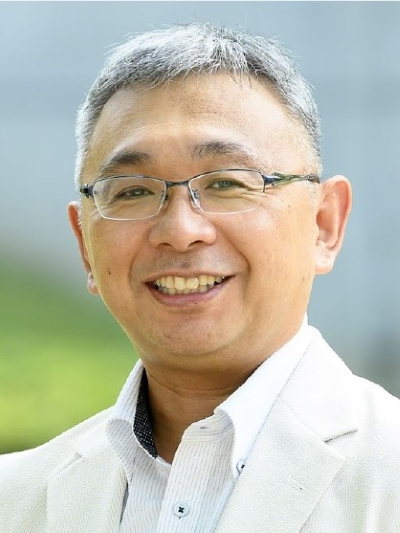
Keiji Wada received the Ph.D. degree in electrical engineering from Okayama University, Okayama, Japan, in 2000. From 2000 to 2006, he was an Assistant Professor with Tokyo Metropolitan University and the Tokyo Institute of Technology. From 2006 to 2020, he was an Associate Professor with Tokyo Metropolitan University. Since 2021, he has been a Professor with Tokyo Metropolitan University. His research interests include power electronics circuits, passive components, solid-state transformers (SSTs), and AI applications in power electronics. He is a Senior Member of IEEE and IEEJ and serves as the Chair of the Technical Program Committee for IPEC 2026.
@IPEC2026 All Rights Reserved.