

Industrial Seminar
Chairs: Prof. Kan Akatsu, Prof. Kantaro Yoshimoto
Seminar 1
14:00-14:30
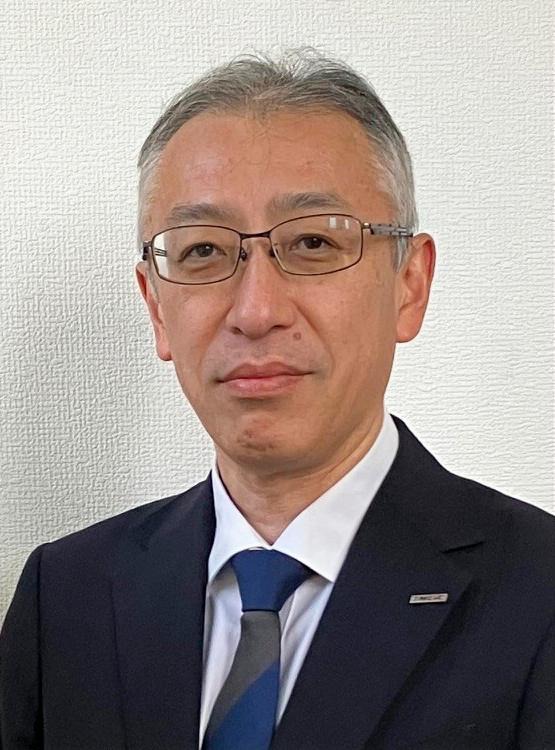
Dr. Manabu Souda
TMEIC
Seminar Title: Power Electronics Technology Enables a Carbon Neutral Society
Biography
Manabu Souda received M.E. degrees in Nuclear Engineering from Tohoku University, Japan in 1996. He joined Toshiba in 1996 and was involved in the development and design of power electronics products. From 2003, he joined Toshiba-Mitsubishi electric industrial systems (now TMEIC). He has been mainly engaged in development large capacity power electronics products for social infrastructure. Currently, Senior Fellow of Power Electronics Systems Division.
Abstract
Carbon neutrality, or net zero, is a global goal that requires accelerated efforts to limit the temperature rise to below 1.5°C by 2050. In this global trend, power electronics technology is considered a key enabler of the clean energy transition and improved energy efficiency.
Electricity from renewable sources, connected via inverters, will become the primary energy source in the future. To form the power grid, renewables need help from large-scale energy storage systems with inverters. The clean energy transition is also accelerating in large and heavy industries, considered hard to electrify. In the steel industry, electrification trend to arc furnaces is found from fossil-fueled blast furnaces.
Green hydrogen is a secondary clean energy source produced by electrolyzers powered by renewable energy. To ensure good integration with future power grids, large-capacity PWM VSC-type AC/DC converters have been developed and are now operating in real-world applications.
This seminar introduces examples of various power electronics technologies applications that support social infrastructure and contribute to achieving a carbon-neutral society.
Seminar 2
14:35-15:05
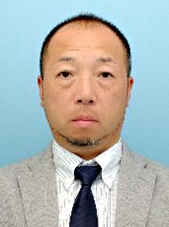
Dr. Masahiro Sasaki
Fuji Electric, Co., Ltd.
Seminar Title: Technical Trend of Silicon Carbide Power Semiconductor Devices
Biography
Masahiro Sasaki received B.S. and M.S. degrees in Electrical Engineering from Tokai University, Japan, in 1992 and 1996, respectively. Then he received Ph.D. degrees in Electrical Engineering from Yamanashi University, Japan, in 2023. In 1996, he joined Fuji Electric, Co., Ltd. He is currently the Manager of Device Development Dept. of Development Division in the Semiconductors Business Group in Fuji Electric. His current responsibilities include the development of silicon carbide and gallium nitride power devices. He is currently a board member of PCIM-Asia.
Abstract
Power semiconductor devices play a major role in achieving high efficiency and compact size of power electronic equipment. Among power semiconductor devices, SiC MOSFETs (Silicon Carbide Metal-Oxide-Semiconductor Field-Effect Transistor) have attracted much attention because of their excellent performance. SiC materials, having wider bandgap than conventional silicon materials, enable both low conduction losses and switching losses especially power semiconductor devices with blocking voltage of higher than 1.2kV. Use of SiC MOSFETs is gradually spreading in various industrial fields, such as traction inverters for xEVs, power converters for renewable energy sources, and main converter inverter for electric trains. In this seminar, we present state-of-the-art SiC MOSFETs and future trends.
Seminar 3
15:10-15:40
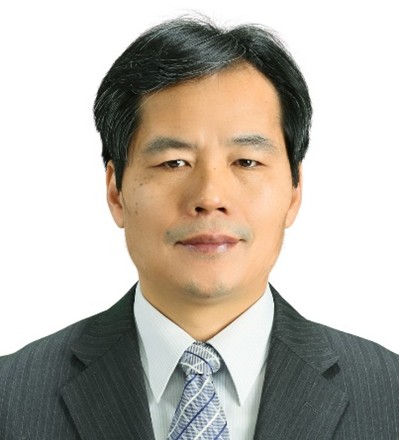
Dr. Zhongwei Guo
Shindengen Electric Mfg. Co., Ltd.
Seminar Title: Control Techniques for Three-Phase Bidirectional Vehicle-to-Everything(V2X) Systems
Biography
Zhongwei Guo (M'09-) received the B.S. and M.E. degrees in pattern recognition and intelligent control from Nankai University, Tianjin, China, in 1988 and 1991, respectively. He joined Shindengen Electric Mfg. Co., Ltd. as a research engineer in 1999. In 2011, he received the Ph.D. degree in system science from Nagasaki University, Japan. He is currently a chief engineer at Shindengen Electric Mfg. Co., Ltd., Japan. His research interests include digital control of power converters, model-based design, simulation technology, grid-connected inverters, bidirectional electric vehicle charging systems for V2X applications, and distributed generation systems. He has contributed to the development of more than thirty patented technologies related to power converters and the control of distributed power supply systems.
Abstract
Electric vehicles (EVs) and Vehicle-to-Everything (V2X) applications have attracted significant attention due to their potential to reduce fossil fuel consumption and their capability for bidirectional charging and discharging. V2X systems enable coordinated power exchange through the interconnection and interaction between EVs and various external systems. In addition to serving as an energy storage resource connected to the utility grid, V2X systems can also operate in islanded operation mode to provide backup power for critical loads during grid outages. Compared with grid-tied operation, which typically employs current control to provide balanced three-phase charging and discharging, islanded operation requires Constant Voltage Constant Frequency (CVCF) control. To meet the power supply requirements of different load types and system configurations, such as single-phase and three-phase loads, varying load capacities, and the integration of photovoltaic (PV) generation, several control challenges must be addressed. These include second-harmonic current suppression, fast transient response, and stable bidirectional CVCF parallel control.
In this presentation, a developed three-phase V2X system consisting of a bidirectional Dual Active Bridge (DAB) converter and a three-phase inverter will be introduced. The technical challenges and corresponding control solutions will be discussed. Simulation and experimental results will also be presented to validate the proposed control techniques.
Seminar 4
16:00–16:30
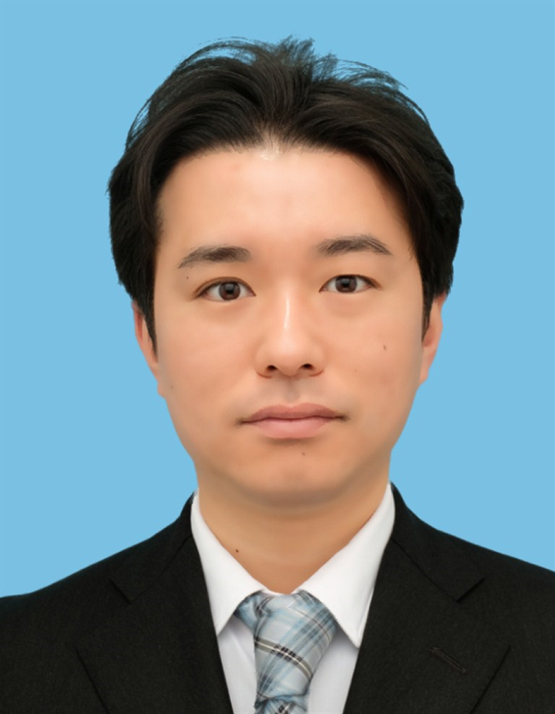
Dr. Ryohei Kitayoshi
Yaskawa Electric Corporation
Seminar Title: Σ-X series: AC Servo Drive for Achievement of Digital Solution
Biography
Ryohei Kitayoshi received the B.S. degree in Engineering Science from Kyoto University, Japan, in 2009, and the M.S. degree in Systems Science from the Graduate School of Informatics, Kyoto University, Japan, in 2011. He received the Ph.D. degree from The University of Tokyo, Japan, in 2021. He was awarded the IEEJ Distinguished Paper Award in 2025.
He is currently engaged in the research and development of servo motors and industrial robots at Yaskawa Electric Corporation. His research interests include automatic controller design, servo motor control, and system identification. He is a member of the Institute of Electrical Engineers of Japan (IEEJ), the Society of Instrument and Control Engineers (SICE), and IEEE.
Abstract
In recent years, AC servo drives have been required not only to play the role of high-speed and high-precision positioning devices but also as information devices that acquire various data through sensor networks. Our current flagship product: the Σ-X series, is a component that maximizes the performance of our customers' equipment and provides data acquisition functions to realize digital solutions such as preventive maintenance and failure prediction. We explain our solution concept: i 3 -Mechatronics, and introduce the lineup, basic performance, and the latest functions of Σ-X based on this concept. In addition, as a case study of the control technology development, this presentation introduces a position control function that stably achieves the desired position response even under variations in the inertia of the mechanical system attached to the servo motor.
Seminar 5
16:35–17:05
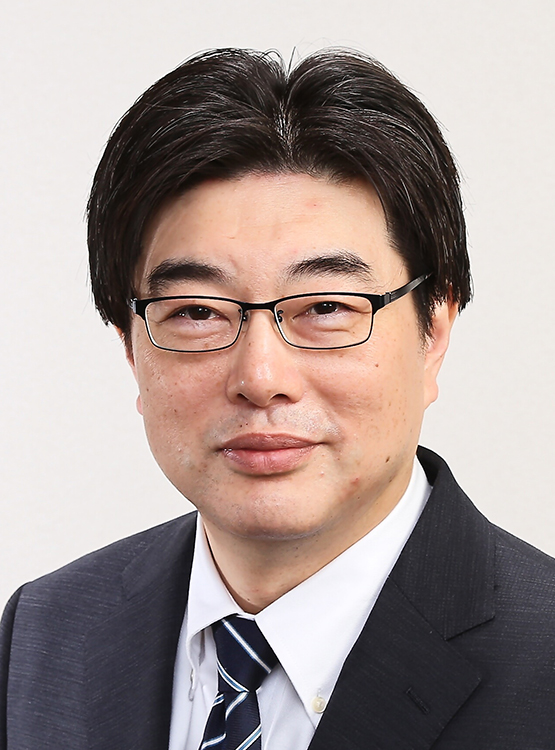
Dr. Koji Terashima
Isuzu Advanced Engineering Center, Ltd.
Seminar Title: Progress and Challenges of Ultra-High-Speed Motors for Vehicle Drive
Biography
Koji Terashima received a Ph.D. in Engineering (Mar. 2004). He joined Isuzu Advanced Engineering Center, Ltd. (2007). Since then, engaged in research on both mechanical and electrical power transmission and lubrication.
Abstract
As vehicle electrification advances rapidly, intensive research is being conducted on ultra-high-speed traction motors, with the aims of improving packaging, lowering manufacturing costs, and reducing the environmental impact of manufacturing. In this report, TRAMI-one of the main hubs of domestic activity- is used as an example to introduce recent trends in such ultra-high-speed research. It is also shown that the challenges are not limited to the motor itself; the progress of research efforts to address these challenges, as well as future directions, is discussed.
Seminar 6
17:10–17:40
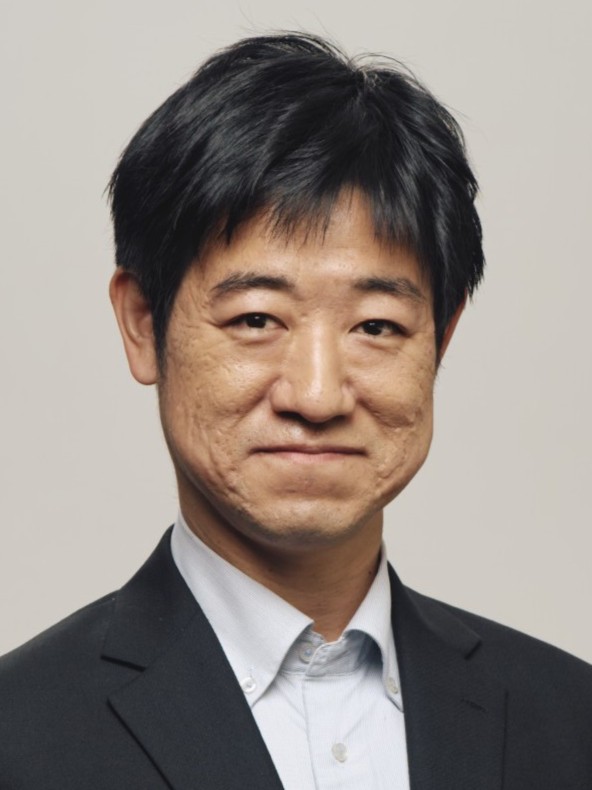
Dr. Yoshinori Yamashita
Mitsubishi Electric
Seminar Title: Synchronous Reluctance Motor Systems for Railway Vehicles and Energy-Saving Technologies
Biography
Yoshinori Yamashita received his M.S. degree in Electrical Engineering from Ritsumeikan University, Japan, in 2007. In the same year, he joined Mitsubishi Electric, where he was engaged in the system design and development of power electronics for railway vehicles. Since 2021, he has been responsible for pre-sales engineering and technical coordination of electrical equipment for railway applications. In 2024, he was appointed Group Manager for New Business Development, where he now leads cross-functional initiatives to optimize energy use and maximize its value.
Abstract
To realize a sustainable society, activities aimed at developing energy-saving technologies and expanding their utilization are gaining attention. Furthermore, recent changes in the energy supply and demand situation, coupled with heightened risks in procuring rare materials such as rare earths, have made resource conservation more essential than ever.
To address these challenges, we developed the world's first Synchronous Reluctance Motor (SynRM) for railway vehicles that achieves world-leading efficiency without rare earth elements, together with its inverter control technology. We successfully implemented a high-output, variable-speed drive system with a maximum output of 450kW SynRM. We have been developing these technologies as our proprietary railway vehicle propulsion system, SynTRACS (Synchronous reluctance motor and inverter TRACtion System).
In this seminar, we will present the features of SynTRACS, examples of its application to revenue service vehicles, and technologies for achieving further energy savings.